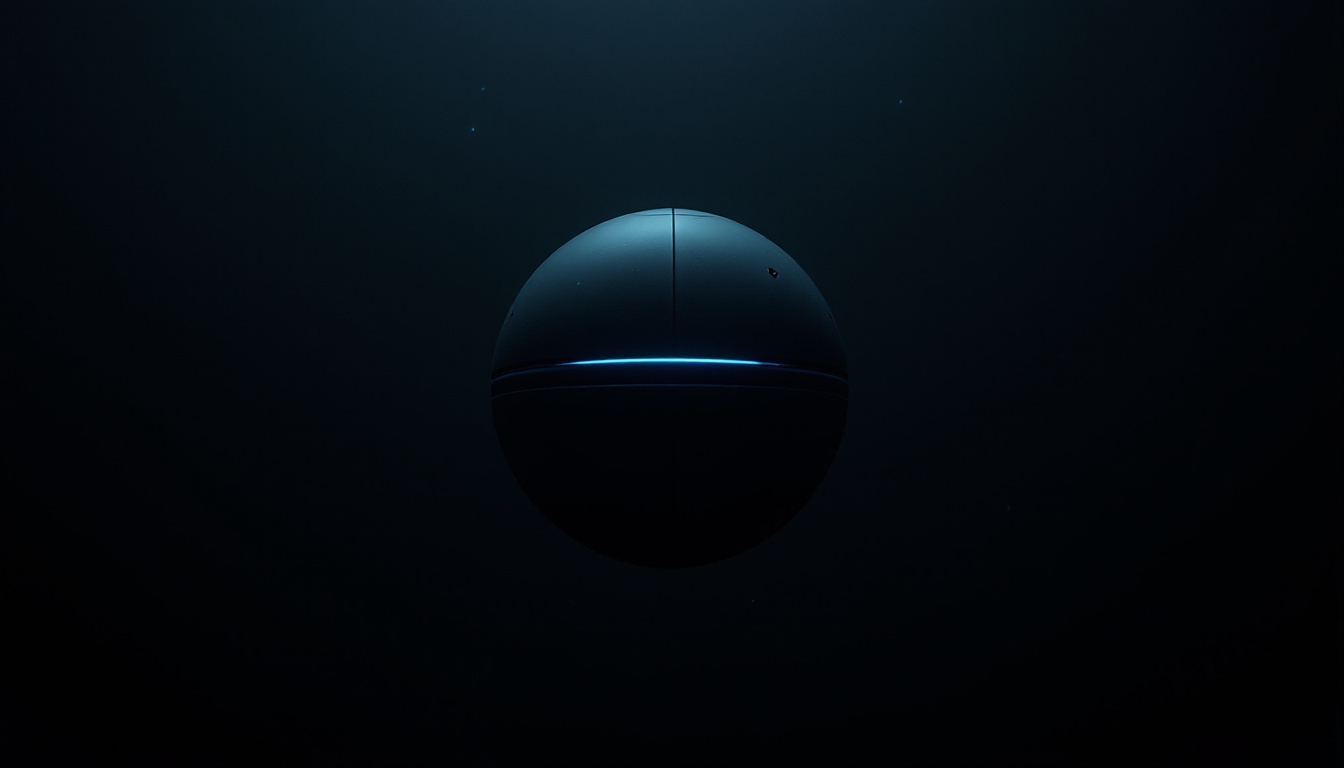
HADAL
Built to go deep, and then to stay.
An experimental autonomous platform for the deepest water on Earth. It holds a position, changes its depth, moves to a new position, and remains deployed — which is the part almost nothing else at depth can do.
The name
Hadal is a real place, not an adjective.
Oceanographers divide the water column into zones. The hadal zone is the last one: the trenches, from roughly 6,000 meters down to about 11,000 at the deepest point anyone has measured. It is named for Hades, and it accounts for the deepest few percent of the ocean.
Almost nothing people build operates there. What does goes down on a tether or a tightly planned schedule, does one thing, and comes back up. Pressure is the reason: at full ocean depth it exceeds a thousand atmospheres, and it is relentless in a way that punishes any design with a void in it.
Nothing inside it to crush.
Deep vehicles usually fight pressure by resisting it — a thick pressure hull holding one atmosphere of air against the sea, engineered to a crush depth and then never taken past it. That approach gets more expensive and more fragile with every hundred meters.
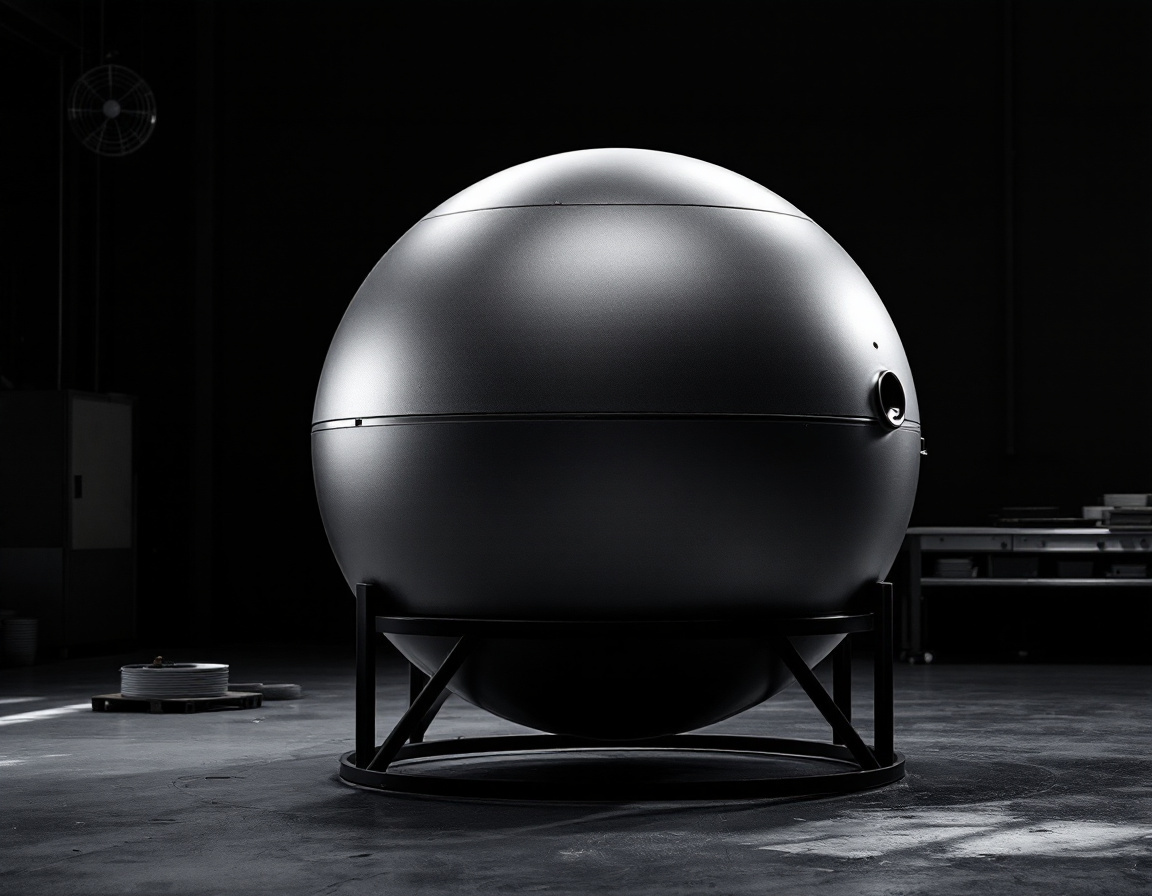
HADAL does not carry the argument. The hull is a sphere, which is the shape that distributes external pressure most evenly, and every internal volume is flooded with clear oil. Oil is effectively incompressible, so the inside of the vehicle sits at the same pressure as the outside at any depth. There is no air space, so there is nothing for the ocean to collapse.
Depth stops being a structural limit and becomes an operating choice.
Drive
A ring around the outside, driven through the hull.
There are no exposed propellers and no rotating shaft passing out through the hull — which is the usual place a deep vehicle fails. Instead, magnets inside the hull switch in sequence and drag a ring around the outside of it, the way a magnetic monorail moves a car without touching it. The only thing crossing the hull boundary is a magnetic field.
The drive and its ring pivot on two axes, which gives the vehicle 350° of steering authority without a control surface, a thruster pod or a gimballed nozzle. Thrust is redirected by moving the ring rather than by adding another mechanism.
Depth
Ballast, so that holding still is cheap.
A vehicle that has to swim to stay where it is spends its whole energy budget doing nothing. HADAL sets its depth by ballast and holds it, so station-keeping is close to free and endurance is measured against the mission rather than against the hover.
The same system is what lets it change depth deliberately: hold at one level, move, settle at another, and stay. Loitering, in the sense the name intends, is a capability rather than a side effect.
The ballast system, the magnet arrangement and the propulsion geometry are trade secrets. They are not described on this site, and they will not be described in a brochure.
Applications
Persistent presence at a depth nobody can reach quickly.
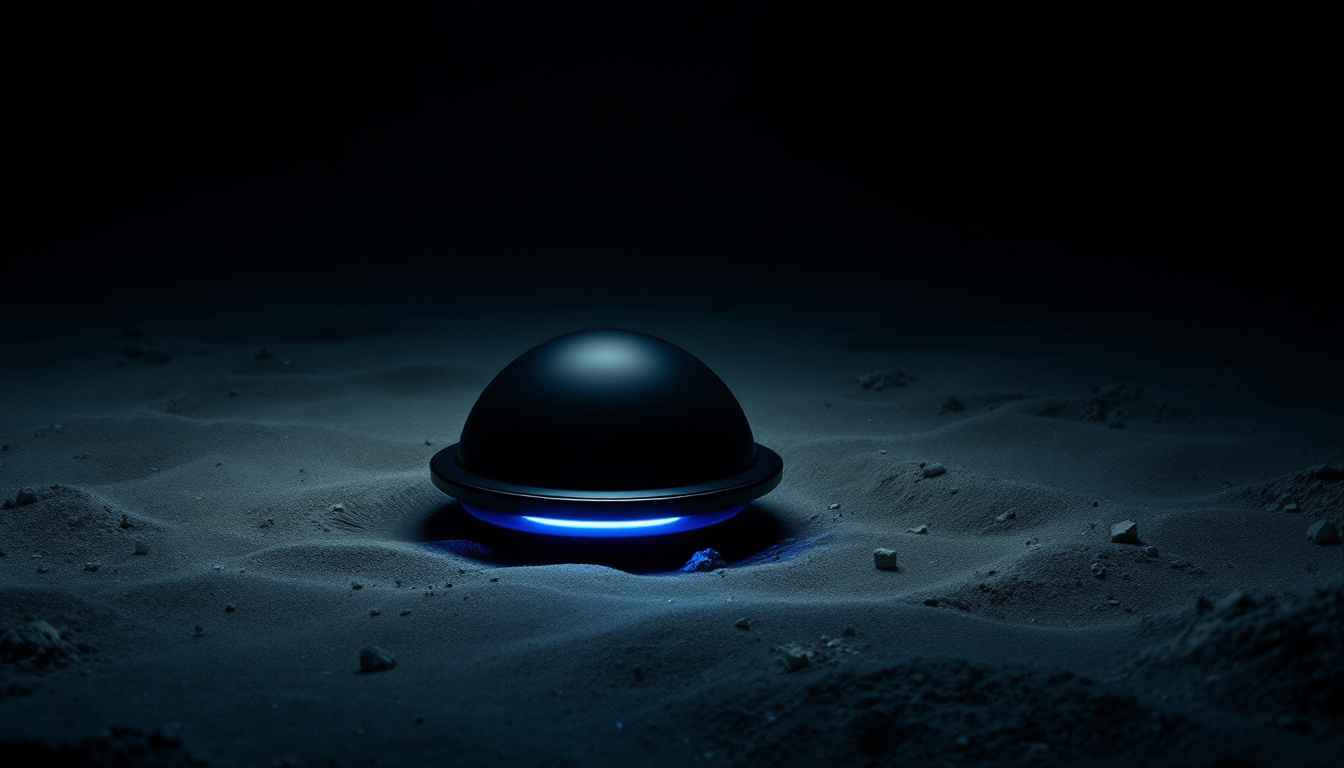
The interesting property is not that HADAL survives depth. It is that it can be left there. A machine that holds a position for a long time, changes depth on command, relocates itself and remains on task turns the deep ocean from somewhere you visit into somewhere you can hold.
The applications are naval, and they include mine warfare — a mobile, depth-agile weapon is a fundamentally different problem for an adversary than a fixed one. Sensing, monitoring and long-duration seabed work run on the same platform.
Specific configurations, payloads and concepts of operation are discussed with qualified parties, under the appropriate authorizations, and not here.
- Stage
- Experimental. HADAL is a development platform and is described here as one.
- Hull
- Spherical, fully oil-immersed internally. No internal air volume.
- Propulsion
- Internal magnetic drive turning an external ring. Two-axis pivot, 350° of steering authority.
- Depth control
- Ballast. Depth is held rather than flown, and changed on command.
- Design depth
- Full ocean depth, to the deepest measured point of the hadal zone.
- Proprietary
- Ballast, magnet arrangement and propulsion geometry are trade secrets and are not published.
- Release of detail
- Performance data, payload interfaces and test results are released to qualified parties only, through the appropriate export authorizations. Nothing on this page is an offer to sell.
HADAL
Program offices, prime contractors, and research organizations working at depth. Tell us who you are and what you need it to do; we will tell you what we can discuss and how.
Ask about HADAL
Include your organization. Detailed discussion requires eligibility we have to establish first, and this is where that starts.